
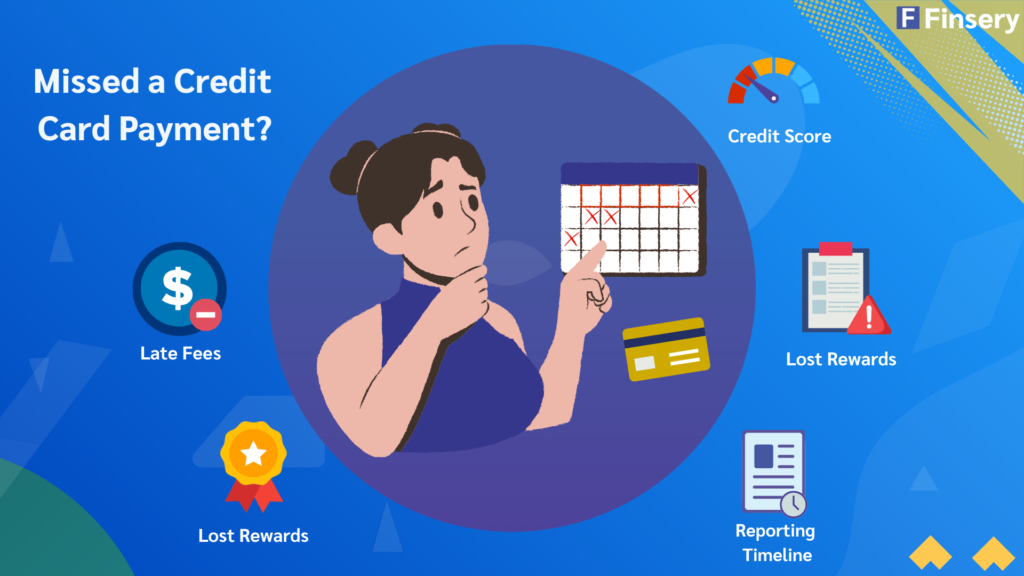
If you miss a credit card payment, things can change faster than most people expect. Late fees show up, interest increases, and your credit score  credit score may drop if the missed credit card payment isn’t resolved quickly. Even skipping just the minimum payment can lead to penalty APR, lost rewards, and a long-term impact on your payment report.
What Happens if I Don’t Pay My Credit Card Bill on Time?
Failing to pay your credit card payment credit card payment on time, not even the minimum payment due, results in your issuer reporting it as late. That one missed payment may result in late fees, additional interest, and even credit scarring if not resolved promptly. So many people think it’s fine to pay the full balance later, but as far as penalties go, dropping off a minimum payment on time is better than adjusting your credit card payment due date to pay in full later.
Missed credit card payments can also result from simple misunderstandings, such as assuming you had autopay set up, the check being cut after the cutoff time, or a partial payment made in the belief that it would pass as on time.
Immediate Consequences of a Missed Credit Card Payment
Once a credit card payment is missed, your account can shift in many ways that increase fees, interest, and overall borrowing costs. Here are the most common consequences.
1. Late Fees and How Much They Can Cost You
The first thing you may notice following a missed payment is the credit card late fee. This, depending on your issuer, can be a modest charge; if the incident occurs more than once, a higher fee can apply. If the balance goes unpaid, interest may also be charged on the fee itself.
2. Higher Interest and Penalty APR
Another common consequence is a higher interest rate. Many lenders apply a penalty APR after a missed credit card payment, especially if it isn’t the first. This new rate can replace your standard rate. It may even cancel promotional offers, including 0% intro APR deals, because the penalty rate can be much higher than the regular credit card interest rate.
3. Loss of Rewards and Perks
A missed credit card payment can also impact the benefits associated with that account. Cashback earnings are halted, travel insurance and purchase protections no longer apply, and some rewards programs are put on temporary freezes until the account is back in good standing. For users who rely on perks or point accumulation, losing these benefits can feel just as frustrating as the financial penalties.
How Missing a Credit Card Payment Affects Your Credit Score
Missing one credit card payment doesn’t just affect fees and interest; it also hurts your credit score. Because on-time payments are a key factor in your credit score, a late payment can signal risk to lenders and lower your score.
- If you have a good or excellent score, a single 30-day late payment could result in a drop in the ballpark of ~60–110 points, depending on your overall credit health.
- If your credit was a more modest score, or you’ve had other negative marks already, the impact may be less severe, sometimes just a few dozen points, because the score has less “good history buffer” to lose.
- Over time, with consistent on-time payments and responsible credit use, you can recover much of the damage. However, the initial drop still makes a significant difference, especially if you apply for a loan or financing soon.
- According to the Consumer Financial Protection Bureau (CFPB)
, A missed credit card payment can remain on your credit report for up to 7 years even if you’ve paid off the balance.
- That impact, however, fades over time, especially if you make all future payments on time.
- Even if the late payment is removed from your credit score, lenders may still see it in your application history, and that can influence whether you’re approved and what interest rate you’re offered.
Payment history is the crucial factor in most credit scoring models. One missed payment indicates a higher risk to lenders. Repeated missed payments do a lot more damage than a one-time slip and make recovery even slower.
How to Recover After Missing a Credit Card Payment
A missed credit card payment can be stressful, but it is not permanent. Taking prompt action helps you manage the impact and return to good standing. By following the right steps, you can protect your credit and prevent further issues.
- Pay at least the minimum balance as soon as you can. This helps keep your account from slipping further behind and may reduce extra charges.
- Call your card issuer and ask for a late fee waiver. Many issuers will waive the fee if you normally pay on time, especially if it’s your first missed payment.
- Freeze new spending on that card. Try to avoid increasing the balance while you catch up and regain control.
- Ask about hardship programs. Some issuers offer temporary lower interest rates or reduced payments.
- Convert purchases into EMI’s:
At checkout: Choose EMI as the payment option and select your preferred tenure.
After purchase: Convert eligible transactions into EMI via your bank’s app, SMS, or customer support. - If it seems like too much to balance, then it’s better to consult a qualified credit counsellor.
- Build consistent on-time payment habits. Set reminders, adjust autopay settings, or schedule payments early, whatever works for you.
- Keep your credit utilization low. Ideally, under 30% of your available limit. This helps improve your credit score while you continue to pay off credit card debt.
- Avoid applying for new credit right away. Hard inquiries and new accounts can temporarily lower your credit score while it’s still recovering.
Frequently Asked Questions
Back to topAccording to Azcourts , a credit card payment is usually reported as late only after it is 30 days past due. Payments missed by less than 30 days may trigger fees or interest, but they don’t affect your credit report.
A credit card payment is considered late only if it is not received by 5 p.m. on the due date, or by 5 p.m. on the next business day if the due date falls on a weekend or federal holiday, as defined by the Consumer Financial Protection Bureau .
Yes, a bank can reduce your credit limit after a missed payment, especially if it happens more than once. This can also increase your credit utilization and lower your score further.
Not usually after one missed payment, but repeated late payments can lead to account restrictions or closure. Issuers review payment patterns before closing the card.
Yes, if payments continue to go unpaid, the account may be sent to collections and could potentially lead to legal action. One missed payment alone typically does not.
A grace period is the time between your statement closing date and the payment due date when interest may not apply. It doesn’t protect you from late fees if you miss the due date.
