
Tiny Interest Charge That Changed the Story

When Ethan saw his credit card bill this month, his stomach dropped. Among all the charges listed, a small line in particular stood out to him. Interest charge “$12.47”. He knew he had paid on time, so why should he be charged? Confused, he rechecked the dates, checked his banking app, and even wondered whether the bank had made a mistake. Then it dawned on him: his payment had posted after the billing cycle, which had already closed.
A few days difference cost him money. Like most cardholders, he never realised that timing mattered just as much as paying.
What is a credit card billing cycle?
A credit card  credit card billing cycle is the period between statements, during which your credit card issuer tallies all your charges, payments, fees, and credits in one transaction. It runs 28 to 31 days
 , depending on the card issuer, and every primary credit card rule, interest rate, grace period, and reporting depends on this cycle. Think of it as your card’s own financial month, where every transaction you make is recorded to your following statement.
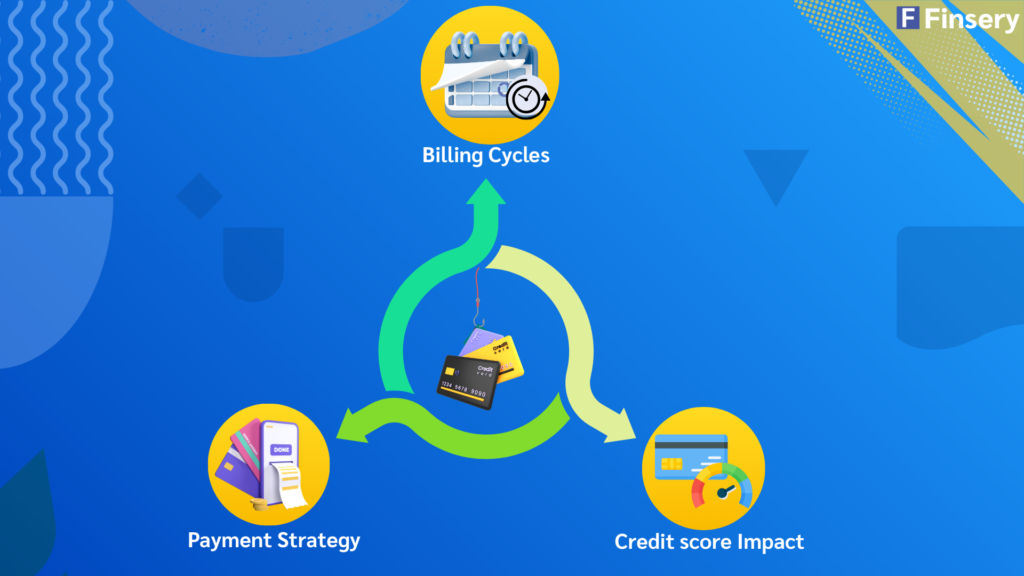
Each billing cycle has three anchor points:
1. Billing cycle start date
The day your new billing period begins. Any transaction made after this date belongs to the new cycle.
2. Billing cycle end date or statement closing date
The statement closing date is the day your card issuer finalizes all your transactions for that cycle. Your reported balance is taken on this date, and this balance appears on your credit report.
3. Credit card statement creation
After the statement closing date, your card issuer generates your monthly bill statement. This statement lists all credit card transactions during the cycle and shows the amount you must pay to stay interest-free.
Learning these three key points will help you understand how your spending and payments appear on your credit card statement, how the grace period works, and how your credit score can change.
How do credit card billing cycles work
Each billing cycle begins on a cycle start date and ends on a statement closing date. On the closing date, your issuer generates your billing statement, which shows the balance you owe for that cycle. Here is how billing cycles work step by step.
A new cycle begins the moment the previous cycle closes. Any purchase or payment made from this point is recorded for the next statement. Each month allows you for renewal and a fresh start.
Throughout the billing cycle, your issuer tracks all the transactions you make with your credit card. Everyday purchases, payments, refunds, credits and balance transfers can quickly add up. The running total, or new balance, appears as the statement balance.
Your statement will be generated shortly after the closing date. It will show your total balance, minimum payment due, and the due date. Once the statement is issued, the amounts listed will not change.
Statement closing date vs Payment due date
Many beginners confuse the closing date and payment due date, often assuming only the due date affects interest charges and credit scores. In fact, each date serves a distinct purpose and impacts your credit differently. The statement closing date marks the end of your billing cycle, while the payment due date typically occurs three to four weeks later.
Statement Closing Date Overview
This is the date your card issuer finalizes your monthly billing. It determines the following:
- The statement balance.
- The reported credit utilization.
- The status of the grace period.
- The amount officially billed for the cycle.
Payments made before the closing date reduce your reported balance. Purchases made just before the closing date decrease your interest-free period.
Payment Due Date Overview
The due date is the deadline to pay the amount owed from your statement. It determines the following:
- Whether you avoid late fees.
- Whether you avoid a penalty APR.
- Whether you paid in full within the grace period.
The due date does not impact your reported utilization for the month, as credit bureaus receive account data based on the closing date.
The table below summarizes how these two dates affect your credit, interest, and payments.
| Category | Statement Closing Date | Payment Due Date |
|---|---|---|
| Primary purpose | Finalizes all activity for the billing cycle | Deadline to pay the amount shown on your statement |
| Impact on credit score | High. This balance is sent to credit bureaus | None. Reporting is already done |
| What gets locked in | Statement balance, utilization, reported balance, grace period status | Nothing gets reported on this date |
| Effect on interest | Decides if next cycle purchases remain interest free | Decides if you keep your grace period by paying in full |
| Pay before this date | Lowers your reported balance and utilization | Prevents late fees, but does not change your reported balance |
| Pay after this date | No change to what was reported | Still required to pay full statement amount to avoid interest |
| Risk of missing it | High utilization recorded for the month | Late fees, penalty APR and loss of grace period |
| Core role | Controls reporting and credit score outcomes | Controls penalties and interest outcomes |
Financial Impact of Confusing these Two Dates
Many people wait until the due date to pay, believing this is sufficient. However, if the closing date passes with a high balance, reported utilization increases, and even a small remaining balance can end the grace period. As a result, interest may be charged even if payment is made on time.
Simple Rules for Paying Credit Card Bills
Pay before the closing date.If you care about avoiding interest:
Pay the full statement balance by the due date.
Understanding the difference between these two dates is the key to control your credit card completely
How billing cycles affect your interest and credit score
Your credit card billing cycle is more than just a monthly statement period. It sets the timing of when interest begins, the length of your grace period, and which balance is reported to the credit bureaus. If you know how these parts work together, you can avoid unexpected interest charges and maintain a better credit score with the same spending habits.
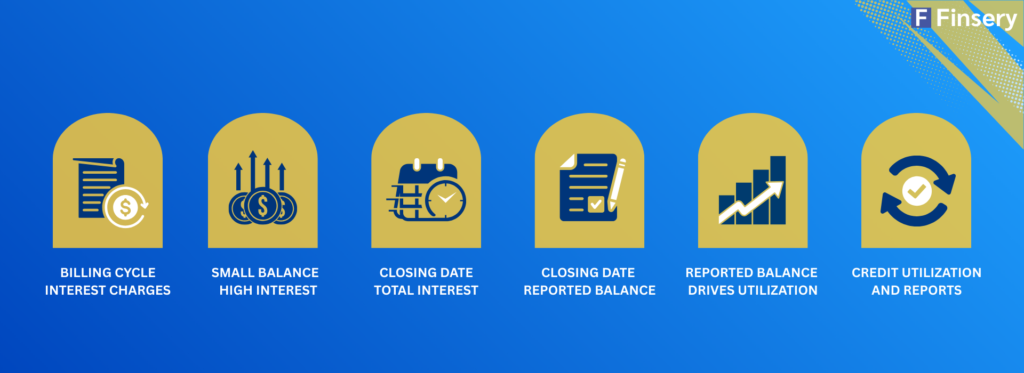
Here are the six most important ways your billing cycle affects both interest and your credit score.
1. Billing cycle controls when interest charges are applied.
Most credit cards offer a grace period that lets you avoid interest on purchases if you meet specific conditions. If you pay your previous statement balance in full, new purchases are typically interest-free until the next due date. If you carry a balance into the next cycle, your issuer may remove the grace period, and interest may begin accruing immediately, even if you make timely payments.
2. Keeping a small balance increases interest charges.
If you do not pay your full statement balance, your next billing cycle will likely be more expensive. The issuer may begin charging daily interest immediately, which can apply to both the remaining balance and new purchases. As a result, you may see interest charges even if you paid by the due date but did not pay the entire statement balance.
3. Statement closing date affects total interest accrued.
Interest is usually calculated using the average daily balance method, which takes into account changes in your account balance during the billing cycle. Higher balances lead to higher interest charges. Payments made after the statement closing date are applied to the next cycle and do not reduce current interest. To minimize interest charges, make payments earlier in the billing cycle rather than waiting until the due date.
4. Closing date determines which credit bureaus receive reports.
Many people assume credit reports are updated based on the amount owed on the due date, but this is not usually the case. Credit card issuers generally report your balance to Experian , Equifax
, and TransUnion
shortly after the statement closing date. Therefore, the balance on your closing date often appears on your credit report, even if you pay it off in full a few days later.
Finsery Pro Tip
5. Credit balance affects utilization and your score.
Your credit utilization ratio is calculated by dividing your credit card balance by your credit limit. Significantly, the reported balance usually depends on the statement closing date, not the payment due date. If you make your payment after the closing date, your credit card statement may show a high balance, even if you pay in full before the payment due date. This timing can cause your utilization to spike and drag your credit score down. That’s why people with perfect payment history may still see score drops: the balance is reported as high before the payment posts.
6. Timing of credit utilization updates on credit reports
Credit utilization does not update immediately after you make a payment. The Consumer Financial Protection Bureau (CFPB) explains that your utilization is based on the balance reported by your credit card issuer to the credit bureaus. Most issuers report balances once per billing cycle, typically around the statement closing date, so your most recent payment may not be reflected right away. The reported balance appears on your credit report and is used to calculate your utilization ratio, which can affect your credit score.
As a result, even if you pay your card balance to zero today, your credit report may still show high utilization until the next statement closes. The updated balance will appear after your issuer reports it to the credit bureaus, and your credit report gets updated.
A Lesson Ethan Will Always Remember
Ethan didn’t need a new credit card or a “credit hack.” He simply learned one key rule: timing matters as much as paying.
Once he understood his billing cycle, statement closing date, and due date, interest charges stopped, and his balance started reporting the right way. When you know your cycle dates, you gain control over your credit card, not the other way around.
At Finsery, we believe financial success isn’t built on shortcuts. It’s built on understanding the rules and using them confidently.
Frequently Asked Questions
Back to topYes, your credit card billing cycle can change if your issuer updates your account terms, changes your statement date, or if you request a new due date. A billing cycle change can affect when your statement closes, when interest is calculated, and when balances get reported to credit bureaus.
No, paying early doesn’t change your payment due date. It simply reduces your current balance before your statement closes or before the due date arrives. Early payments are still helpful because they can lower your reported balance and credit utilization.
Even if you pay the full balance, you may still be charged interest if you missed the grace period earlier, your payment is posted after the statement closed date, or you had a small balance from the last cycle. So, even if you pay on time, your payment timing and grace period rules can still trigger interest.
Not directly, making the minimum payment on time helps protect your payment history. However, paying only the minimum can keep balances high, which can increase your credit utilization ratio and lower your credit score.
