
Emma Realized Her “Extra Money” Wasn’t Extra

When Emma got her first credit card in college, it felt like free money. Swipes for coffee, takeout, weekend plans… everything felt light and effortless. Then her first real statement arrived. The number didn’t match her memory at all. It was bigger, heavier, and suddenly very real. Most people in America learn that same lesson the hard way. A credit card isn’t extra cash. It’s borrowed money wrapped in convenience.
Let’s understand how credit cards really work so you don’t end up repeating what Emma did.
Credit Card 101: Basics You Must Know
Credit cards can be incredibly useful when you understand how they work. They offer convenience, protection, and a real chance to build strong credit, but misuse can hurt your finances fast. At Finsery, we focus on helping you use credit cards the smart way, so you keep control of your money, not the other way around.
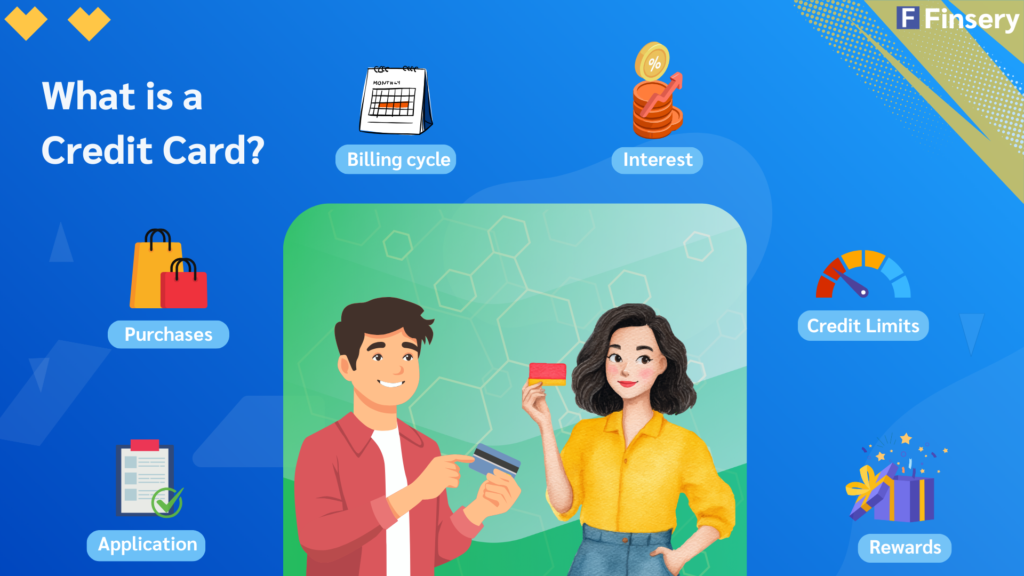
What is a Credit Card?
A credit card is a financial tool that lets you borrow funds from your bank for purchases, bill payments, or cash withdrawals. The bank assigns a credit limit, which is the maximum amount you can spend. You may use the card up to this limit and repay the borrowed amount in full or over time.
How Do Credit Cards Work?
Understanding how a credit card works may seem straightforward, but the details are important. While the basics are simple, how a card operates can determine whether you build a strong credit record or accumulate debt. Finsery aims to provide clear explanations so you can use your card with confidence.
Application and Approval
Before an issuer approves a card, there is a brief check regarding your financial stability. They consider a review of your credit score, your income, any loans or debts you might have outstanding, and how consistently you have made bill payments. This helps the issuer decide if you are eligible for that particular card and what your credit limit will be.
After the approval, the Bank sets your credit limit-it states how much you’re allowed to borrow. Generally speaking, if your credit history is clean and your income is stable, you’ll qualify for higher limits and better card options.
Purchases
When you use your card, the bank pays the merchant instantly on your behalf. You now owe that amount to the bank. When you swipe your card in a store or enter the card details online, three parties work behind the scenes. The payment network you’re using (Visa , Mastercard
, American Express
, or Discover
) redirects and verifies the payments, the merchant receives the money, and your card issuer records the transaction on your account. Once the transaction is approved, the amount you spent is deducted from your available credit.
Billing Cycle and Interest-free Use
- Every credit card runs on a monthly billing cycle
 billing cycle that lasts roughly 28 to 31 days. The cycle starts on your account’s opening date and ends on the closing date, when your card issuer reviews all your spending that month and finalizes your statement.
 - When the cycle closes, your issuer sends a statement that outlines everything you need to know for the month. This statement includes your total balance, the minimum payment due, your interest rate, the due date, and a full list of your purchases.
- Each month, you decide how much to repay. You may pay the full balance, a partial amount, or the minimum required. Interest applies to any remaining balance.
- The best way is to pay your full statement balance during the grace period. By doing so, you avoid interest charges on purchases.
Interest and Fees
- Interest is the cost of borrowing money on your credit card. An Annual Percentage Rate (APR) is applied to any part of your balance that you don’t pay off. If you don’t pay the full balance, the leftover amount starts accruing interest.
- Most credit cards in the US come with pretty high APRs of 20 to 30 percent, depending on your card and credit history. Since the interest compounds, even small balances can turn into an enormous debt before you know it.
- Fees are extra charges your card issuer adds only in certain situations, such as paying late, taking a cash advance, or spending past your limit. They’re easy to avoid, but if you’re not paying attention, they can build up faster than you’d expect.
Credit Limits and Utilization
- The amount of credit you have and your credit utilization significantly affect your credit score credit score. High utilization lowers your score, so aim to keep your credit card balance below 30% of your limit. Paying part of your balance before the statement closing date can also help improve your score.
- On-time payments are the most important factor in building a strong credit score. Paying your credit card bill on time, even if only the minimum amount, protects your credit score. Consistent on-time payments and low utilization support long-term financial health.
Credit Card Rewards
Credit card rewards offer bonuses each time you make a purchase, such as groceries or fuel. Some cards provide cashback that you can use as you wish, while others let you earn points or miles redeemable for flights, hotel stays, gift cards, or statement credits. To maximize these benefits, choose a card that matches your spending habits and pay your balance in full each month. This approach allows you to turn everyday purchases into added value with minimal effort.
Finsery Pro Tip
Pay down the card before the statement closing date. It lowers the balance that gets reported, keeps utilisation cleaner, and directly impacts the credit score credit score. It’s one of the easiest ways to avoid showing up as high-risk on your credit report.
Credit card vs Debit card vs Charge card
Understanding the differences between credit, debit, and charge cards is essential for effective financial management. Although these cards appear similar, they operate differently and impact your finances, spending power, and credit score in distinct ways. Knowing how each card works will help you select the best option for your financial goals.
| Feature | Credit card | Debit card | Charge card |
|---|---|---|---|
| Where funds come from | Borrowed from bank/issuer up to a credit limit | Directly from your bank account balance | Temporarily borrowed funds that must be fully repaid each month |
| Monthly Payments | Can pay in full or pay minimum and carry a balance | No monthly payments (spending deducted instantly) | Full payment is required monthly with no option to carry a balance |
| Interest | Charged if you don’t pay in full (APR applies) | No interest (your own money) | No interest, but late fees can be very high |
| Spending Limit | Fixed credit limit set by issuer | Your bank balance determines limit | Usually no preset spending limit, varies by usage history |
| Impact on Credit Score | Builds or damages credit score depending on use | Not reported to credit bureaus in most cases | Builds credit score with responsible payment history |
| Rewards & Benefits | Offers rewards like cash back, points, and miles | Limited or no rewards | Strong premium rewards, travel perks, business benefits |
| Fees | Possible annual fees, late fees, cash advance fees | Low fees, mainly ATM charges | Often higher annual fees |
| Best For | Building credit & earning rewards | Everyday spending & budgeting | High spenders and business users |
Types of Credit Cards
| Card Type | Primary Benefit |
|---|---|
| Cash Back Cards | Earn a percentage back on everyday spending, redeemed as cash or statement credits. |
| Travel Rewards Cards | Collect miles or points toward flights, hotels, and travel perks. |
| Student Credit Cards | Help students establish credit early with simpler approval requirements. |
| Secured Credit Cards | Build or rebuild credit using a refundable security deposit as your credit limit. |
| Business Credit Cards | Manage business spending, earn rewards on business expenses, and keep personal and business finances separate. |
| Low-Interest Cards | Reduce the cost of carrying a balance with a lower ongoing APR. |
| Balance Transfer Cards | Move existing debt to a low or zero APR offer to pay it down faster. |
| General Rewards Cards | Earn flexible points you can redeem for travel, merchandise, or statement credits. |
| Store Credit Cards | Get discounts, exclusive offers, or promotional financing at a specific retailer. |
Why Credit Cards Can Be Powerful Financial Tools
Credit cards offer important financial benefits when used wisely. They boost your purchasing power and help you build overall financial stability. By using a credit card responsibly, you can earn rewards and cash back, as well as build your credit.
Making payments on time improves your credit history and raises your credit score. This can lead to better loan offers and lower interest rates. Many rewards credit cards give you 1%-5% percent cashback on everyday purchases, allowing you to gain real value for the money you already plan to spend.
Common Credit Card Mistakes
- Never consider your credit limit to be your money-it’s borrowed money.
- Regularly review your credit card statement for billing errors or fraud.
- Try not to make only the minimum payment due, as this creates long-term interest and revolving debt.
- Avoid applying for multiple cards in quick succession, as excessive hard inquiries can negatively impact your credit score.
Understanding the Revolving Credit Trap
You may be unknowingly trapped in long-term credit card debt due to the revolving credit system used by credit cards. The minimum payment required by credit card companies is typically between 2% and 5% of your balance, which seems reasonable but is intended to prolong repayment for years.
Always pay more than the minimum, maintain a low credit utilization rate, and strive to pay off your balance in full to avoid high APR charges and falling into the credit card debt trap. You can avoid long-term financial stress and safeguard your credit score by using revolving credit responsibly.
When you only make the minimum payment, the majority of your money goes toward credit card interest rather than lowering the actual balance, trapping you in debt while the bank makes money.
Frequently Asked Questions
Back to topYes, you can withdraw money using a cash advance, but it’s expensive. Cash advances come with high fees, higher interest rates, and interest starts immediately. It’s best to use them only in emergencies.
There isn’t any one particular card that is necessarily the easiest to get with a high limit, because limits are based upon your credit score, income, and overall financial history. However, cards from banks with which you already have an account, or premium reward cards, often include higher starting limits if you have strong credit with stable income.
Using 90% of your credit card limit negatively affects your credit score because it significantly increases your credit utilization ratio, one of the major factors in credit scoring. It also signals high risk to lenders and may result in higher interest charges, lower chances of approval for future credit, and possible limit reductions by the issuer.
The minimum payment is the smallest amount you must pay to keep your account in good standing. Paying only the minimum leads to high interest costs and long-term debt.
Paying only the minimum amount due keeps your account active but leads to long-term interest and can trap you in revolving debt.
No, getting a credit card does not hurt your credit by itself. However, a hard inquiry during the application process might temporarily lower your credit score. Using the card responsibly, making payments on time, and keeping balances low will ultimately improve your credit score.
