
Why a Good Income Didn’t Save This Credit Card Application

Last year, James from Texas applied for a rewards credit card, thinking he would be approved easily. He had a steady job and believed his credit score was good. But his application was denied almost immediately. Like many people, he thought approval was based only on income or credit score. What he didn’t realize is that U.S. credit card companies also consider things like how much credit you’re using, how many recent applications you’ve made, and your overall debt. Every day, thousands of credit card applications are turned down in the United States for reasons that can often be fixed once you know what lenders look for.
James’s experience is common. Each day, thousands of Americans apply for credit cards, hoping to get approved, but many are turned down. Although it can feel unpredictable, credit card companies use clear financial signals to decide who qualifies. The good news is that most reasons for rejection are easy to spot and, even better, you can do something about them. When you know what lenders want, you can make a few changes to your credit profile and boost your chances of getting approved next time.
Common Reasons Your Credit Card Application Was Rejected
Credit card issuers assess several financial factors prior to approving an application. If a significant criterion does not satisfy their risk standards, the application may be declined. The following outlines common reasons for credit card rejection and strategies to address them.
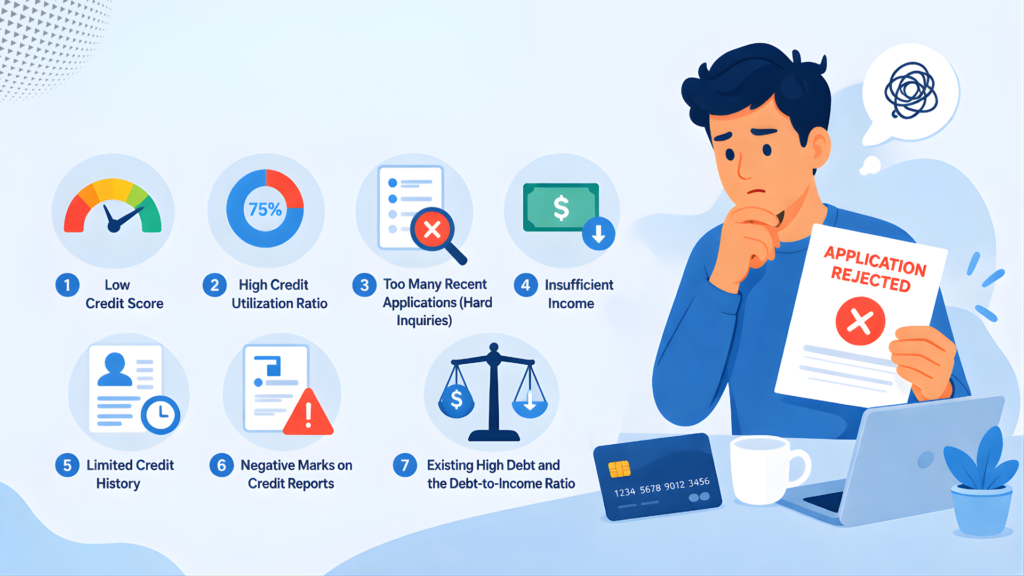
1. Low Credit Score
A low credit score 
 What is a credit score and How a good score can help you save money? is a primary reason for credit card application rejection. The credit score reflects an individual’s credit history, and lenders use it to assess the likelihood of timely repayment. Most premium credit cards require a minimum score of 690, whereas scores below 630 typically restrict applicants to secured or credit-builder cards. Applicants with low scores are often perceived by lenders as higher-risk borrowers.
Improving a credit score involves consistently paying bills on time, reducing outstanding balances, and limiting the number of credit applications submitted within a short timeframe. Regularly reviewing credit reports for errors is also recommended, as correcting inaccurate negative entries may result in a rapid score increase.
2. High Credit Utilization Ratio
Credit utilization is the proportion of available credit currently in use and is a significant factor in approval decisions. When a high percentage of available credit is utilized, lenders may perceive the applicant as financially overextended, regardless of timely payments. Maintaining a utilization rate below 30% is generally advised, while keeping it under 10% can substantially enhance the likelihood of approval.
You can improve your utilization ratio by paying down balances before applying, making multiple payments during the month, or requesting a credit limit increase. Another smart strategy is to keep older accounts open, as closing them can reduce your total available credit and increase your utilization percentage.
3. Too Many Recent Applications
Submitting multiple credit card applications within a brief period can negatively affect approval prospects, as each application results in a hard inquiry 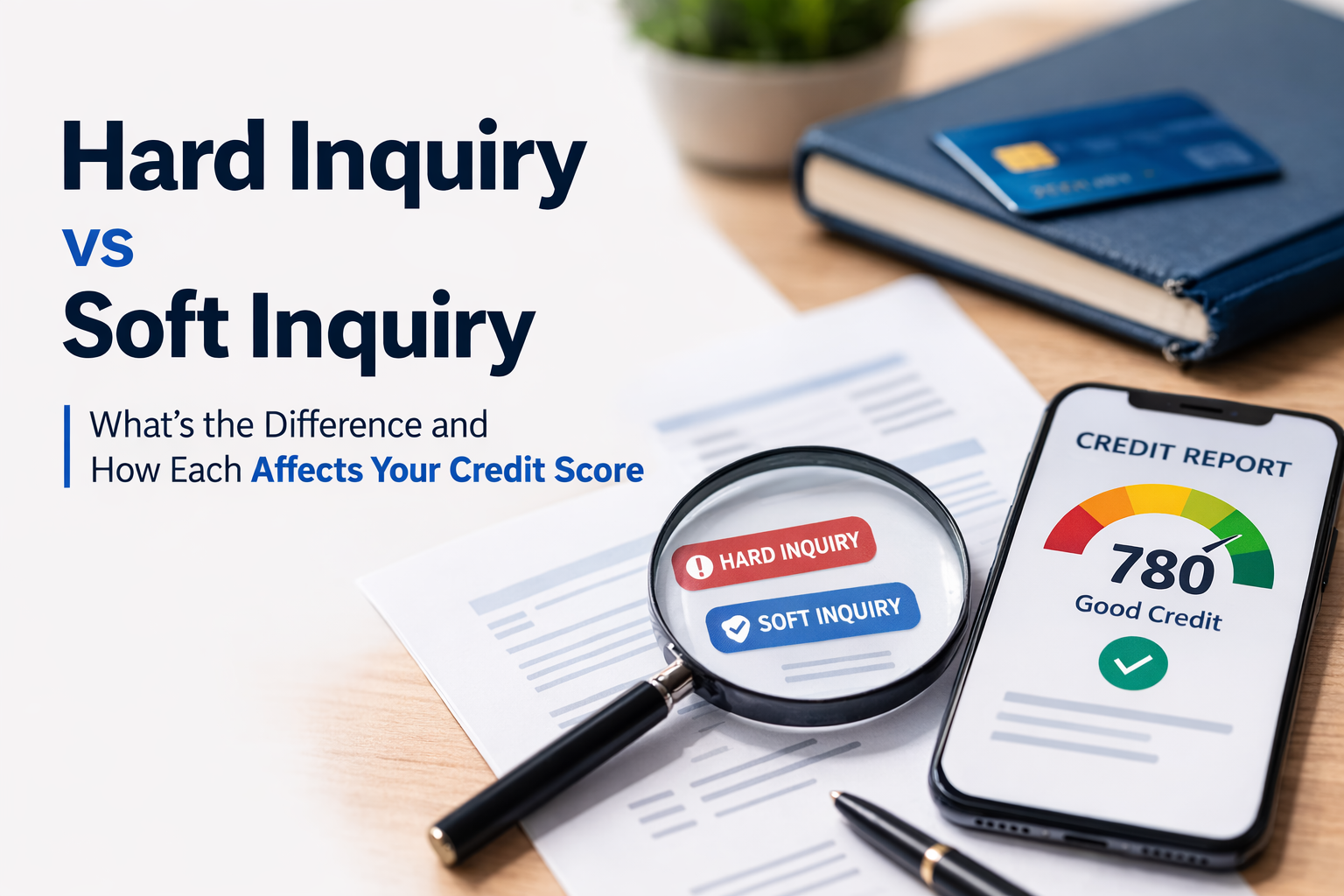 Hard Inquiry vs Soft Inquiry: Differences, Credit Score Impact and How to Minimize Damage on the credit report. Numerous recent inquiries may indicate to lenders that the applicant is actively seeking credit due to potential financial difficulties, thereby increasing the lender’s perceived risk.
To mitigate this issue, applicants should space out credit applications by a minimum of three to six months and apply only for cards that align with their credit profile. Utilizing prequalification tools is also advisable, as these tools provide an indication of approval likelihood without impacting the credit score.
4. Insufficient Income
A strong credit score does not guarantee approval if income is deemed insufficient relative to existing financial obligations. Credit card issuers evaluate whether applicants possess adequate income to manage additional credit responsibly. Unstable or unverifiable income can further decrease the likelihood of approval.
Applicants may strengthen their applications by reporting all eligible income sources, including salary, freelance work, and other regular earnings. Some issuers permit the inclusion of household income. For individuals with limited income, applying for entry-level or secured credit cards may increase approval odds, as these products generally have lower qualification requirements.
5. Limited Credit History
Individuals who are new to credit may not provide lenders with sufficient information to evaluate financial behavior. A limited credit history can hinder issuers’ ability to assess credit management reliability, potentially resulting in application rejection even in the absence of negative records.
Establishing a credit history is a gradual process; however, it can be accelerated by becoming an authorized user on a responsible individual’s credit card, applying for a secured credit card, or utilizing a student credit card. Maintaining active accounts and making timely payments contributes to a positive credit record, thereby enhancing the likelihood of future credit approval.
6. Negative Marks on Credit Reports
Negative items, including late payments, collections, charge-offs, or bankruptcies, can substantially decrease the likelihood of approval. These marks indicate prior repayment difficulties and elevate the perceived risk for lenders. Recent negative activity typically exerts a greater influence than older issues.
To enhance the probability of approval, individuals should review their credit reports thoroughly and dispute any inaccuracies. When feasible, settling outstanding collections and establishing a consistent history of timely payments is recommended. Over time, positive credit behavior may mitigate the effects of previous negative marks.
7. Existing High Debt and the Debt-to-Income Ratio
Lenders evaluate the amount of existing debt relative to an applicant’s income, a metric known as the debt-to-income ratio (DTI). Even with a strong credit score, a high level of existing debt may suggest a limited capacity to manage additional credit, which can result in application rejection.
Improving the debt-to-income ratio typically requires repaying existing loans, refraining from incurring new debt prior to application, or increasing income where feasible. Delaying an application until debt levels decrease can substantially enhance the likelihood of approval.
How to Find Out Why Your Credit Card Application Was Denied
When a credit card application is denied, United States law requires lenders to provide an adverse action notice explaining the specific reasons for the decision. This notice identifies the factors that influenced the outcome and outlines areas for potential improvement before submitting another application. Careful review of this information can reduce the likelihood of repeated denials and enhance the probability of future approval.
What a Credit Card Denial Letter Includes
- Credit score used
The notice typically displays the credit scoreWhat is a credit score and How a good score can help you save money? and scoring model (such as FICO or VantageScore) used to evaluate your application. This allows you to determine if your score met the card’s approval criteria. - Key rejection factors
Lenders are required to list the primary reasons for denial, such as a low credit score, high credit utilization, multiple recent inquiries, insufficient income, or negative marks like late payments. This information identifies areas for improvement. - Credit bureau used
The notice specifies which credit bureau (Experian, Equifax, or TransUnion) supplied your report. Since reports may differ between bureaus, review the one referenced in the decision. - Your consumer rights
The letter outlines your rights under the Fair Credit Reporting Act (FCRA), including the right to request a free credit report and dispute any inaccurate information that may have impacted your application.
Steps to Take After a Credit Card Rejection
- Review the denial letter carefully.
Identify the main reason for denial, as most rejections are due to one or two key factors. - Examine your credit report thoroughly.
Check for errors such as incorrect late payments, unfamiliar accounts, or outdated balances. Even minor mistakes can impact approval decisions. - Determine your primary financial weakness.
Assess whether the issue involves your credit score, debt levels, income, or credit history length to address the correct area. - Take targeted steps to address the issue.
For example, pay down balances if your utilization is high, prioritize on-time payments if your score is low, or wait before reapplying if you have many recent inquiries. - Wait before submitting another application.
Applying again immediately without improving your profile may result in another denial. Allowing 3 to 6 months to strengthen key factors can significantly improve your chances of approval.
How to Improve Your Chances of Credit Card Approval
If your credit card application was denied, you can often improve your approval chances by making a few strategic changes. Issuers consider responsible credit use, stable income, and manageable debt. Strengthening these factors can help you succeed when you reapply.
Payment history is the largest component of your credit score, making up about 35% of your FICO score. Even one missed payment  What Happens if I Miss a Credit Card Payment? How to Avoid Long Term Damage can lower your score and affect approval chances. Lenders view consistent, on-time payments as a sign of reliability.
To strengthen your payment history:
- Set up automatic payments to avoid missing due dates.
- Use payment reminders or budgeting apps.
- Always pay at least the minimum amount due.
- Try to pay the full balance whenever possible.
Establishing three to six months of on-time payments can already enhance your credit profile. According to FICO credit score factors , payment history makes up the largest portion of your credit score calculation.
High balances may indicate risk, even with a good credit score. Lowering your debt reduces credit utilization and improves your debt-to-income ratio, both of which are important for approval decisions.
To reduce debt more quickly:
- Pay more than the minimum payment
 What is a Credit Card Minimum Payment and How Does it Work?.
 - Focus on high-interest
 What is a Credit Card Interest and How Does It Work? A Simple Guide balances first.
 - Avoid adding new purchases before applying.
- Consider the snowball or avalanche payoff methods.
Reducing your balances by 10 to 20 percent before applying can increase your chances of approval.
Many applications are rejected because the card requires a higher credit score than the applicant has. Applying for cards that match your credit level increases your chances of approval.
For example:
- Fair credit (630–689): Starter or secured cards
- Good credit (690–719): Cash back cards
- Excellent credit (720+): Premium rewards cards
Applying strategically, rather than aspirationally, improves your likelihood of approval.
Many credit card issuers provide prequalification tools that use a soft credit check to estimate your approval odds. This process lets you review potential options without affecting your credit score.
Benefits of prequalification:
- No impact from a hard credit inquiry
- Provides realistic approval odds
- Reduces the likelihood of unnecessary rejections
- Assists in selecting the most suitable card
Prequalification is a safe and strategic approach to the application process.
If you were recently denied, reapplying immediately without addressing the issues may result in another rejection. Allow time to strengthen your financial profile before submitting a new application.
General waiting guidelines:
- After denial → wait at least 3 months.
- After improving credit → wait 3–6 months.
- After major negatives → wait longer if needed.
Use this period to improve your credit factors and increase your chances of approval.
If you continue to face approval challenges, a secured credit card may help you rebuild or establish your credit. These cards require a refundable security deposit and typically have more accessible approval criteria.
Key benefits of secured credit cards include:
- Increased likelihood of approval
- Helps establish a positive payment history
- Reports account activity to major credit bureaus
- Can upgrade to unsecured cards later
Many individuals successfully rebuild their credit by starting with secured cards.
To increase your chances of approval, address the following areas before reapplying:
Approval improvement checklist:
- Reduce credit utilization to below 30 percent, ideally under 10 percent.
- Make all payments on time.
- Avoid new hard inquiries.
- Dispute and correct any errors on your credit report.
- Pay down existing loans.
- Establish several months of positive credit activity.
Making small improvements across several factors is often more effective than focusing on only one.
Fastest Ways to Fix a Credit Card Rejection
If your credit card application was denied, addressing a few key factors can quickly improve your chances of approval. Rather than reapplying immediately, focus on strengthening your credit profile with these strategies.
- Pay down balances below 30%: Lowering your credit card balances reduces your credit utilization ratio, which can quickly improve your approval chances. Most lenders prefer utilization below 30%, with under 10% considered ideal. Paying down balances before reapplying may enhance your credit profile within one or two billing cycles
 What is a billing cycle and How does it work? A Complete Beginner’s Guide.
 - Dispute errors on your credit report: Incorrect information, such as inaccurate late payments or accounts, can result in rejection. Review your credit report and dispute errors with the credit bureaus to remove negative factors and improve your approval chances.
- Make all payments on time: Payment history is the most important credit factor. Making all payments on time, even the minimum, demonstrates responsible credit behavior and strengthens your application.
- Avoid new credit applications: Applying for multiple cards after a rejection can reduce your chances due to additional hard inquiries. It is best to wait at least 3 to 6 months while improving your credit profile before reapplying.
- Build 3–6 months of positive credit history: Using your existing credit responsibly for several months can increase lender confidence. Keeping balances low and making consistent payments demonstrates financial stability.
- Use a secured credit card if needed: If approval is challenging, consider a secured credit card, which requires a deposit and typically has more accessible approval requirements. Responsible use can help you qualify for better cards in the future.
Frequently Asked Questions
Back to topEven with a good credit score, your application can be denied due to high debt, high credit utilization, low income compared to obligations, too many recent applications, or limited credit history. Lenders evaluate your full credit profile, not just your score.
Most experts recommend waiting at least 3 to 6 months before applying again. This gives you time to improve your credit score, reduce balances, and avoid additional hard inquiries that could lower approval chances.
A rejection itself does not hurt your credit score. However, the hard inquiry from the application may cause a small temporary drop, usually by a few points.
Secured credit cards, student credit cards, and credit builder cards are usually the easiest to get approved for because they have lower approval requirements and are designed for people with limited or damaged credit.
Yes, but it is usually not recommended. Applying again without improving your credit profile may lead to another rejection and additional hard inquiries, which could further reduce your approval chances.
Most basic credit cards require at least a 630 credit score, while better rewards cards typically require 690 or higher. Premium cards often require scores above 720.
Yes. By law, lenders must send an adverse action notice explaining the main factors that caused the denial. This helps you understand what needs improvement.
