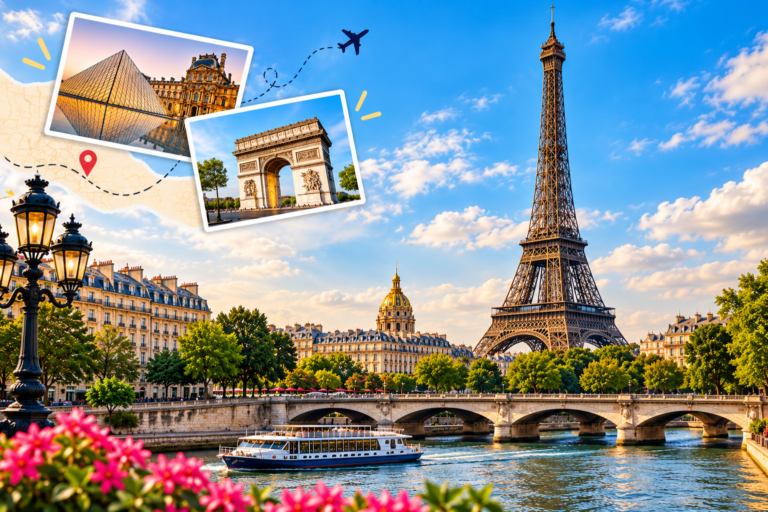
Paris is one of the world’s most popular destinations, and exploring the top tourist attractions in Paris in 2026 does not have to break your budget. From the Eiffel Tower and Louvre Museum to Notre-Dame Cathedral and Montmartre, this budget-friendly guide covers attraction prices, free things to do, transportation costs, affordable food options, and practical ways to save money. Your total Paris travel budget depends on accommodation, dining, transportation, and how many paid attractions you choose to visit.
Top Tourist Attractions in Paris in 2026
Paris offers a mix of world-famous landmarks, historic sites, museums, and free attractions that can fit different travel budgets. From the Eiffel Tower and Louvre Museum to Notre-Dame and Montmartre, this guide highlights the top tourist attractions in Paris in 2026, including estimated ticket prices, free alternatives, and practical ways to save money while sightseeing.
1. Eiffel Tower
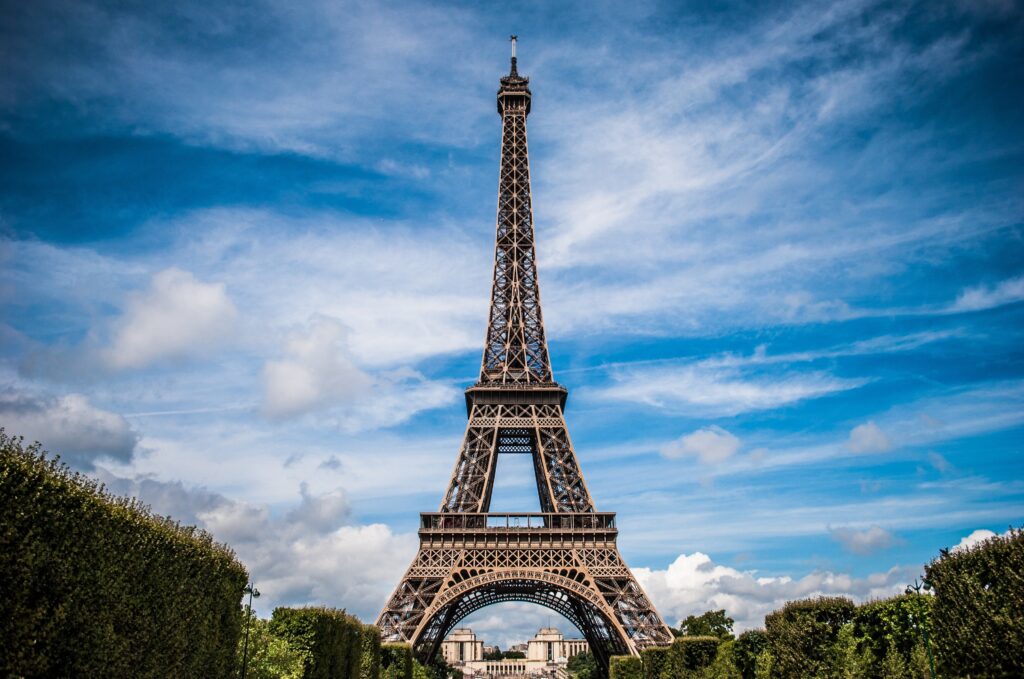
The Eiffel Tower was built for the 1889 World’s Fair and has become one of the defining symbols of Paris. Designed by engineer Gustave Eiffel’s company, the iron landmark was originally intended as a temporary exhibition structure but remained after the fair because of its usefulness and popularity. Today, it is one of the city’s most recognizable attractions and offers views across central Paris.
In 2026, adult elevator tickets cost $26 for the second floor and $41 for the summit. Prices can change, so check the official Eiffel Tower website before booking. The landmark offers some of the most famous views of Paris, making it worth considering even for travelers with a limited sightseeing budget. Visitors can choose between different levels depending on how much they want to spend and how much of the city’s skyline they want to see.
You do not need to pay for a ticket to enjoy the surrounding area. Trocadéro Gardens and Champ-de-Mars offer free views of the landmark and are excellent spots for photos and a budget-friendly picnic. If you want to go inside, booking ahead can help you secure your preferred time and avoid unnecessary last-minute costs.
2. Louvre Museum
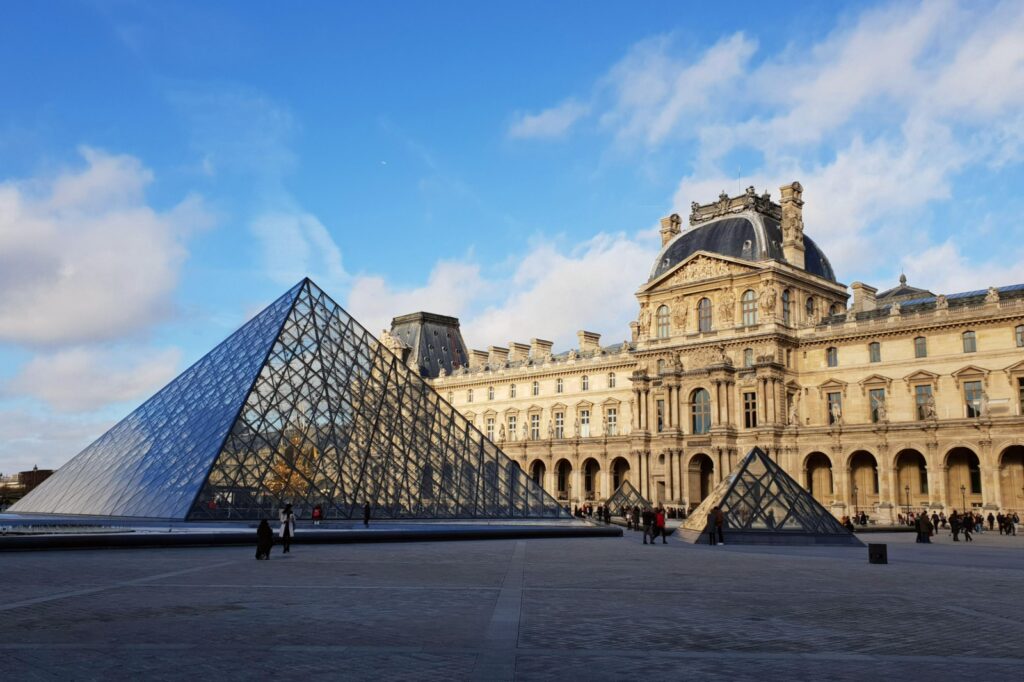
The Louvre began as a medieval fortress in the 12th century before being transformed into a royal palace and eventually one of the world’s largest museums. It became a public museum during the French Revolution and is now home to an enormous collection spanning thousands of years of art and history. Its glass pyramid entrance has also become one of the most recognizable modern features of the Paris landmark.
In 2026, admission is $25 for EEA visitors and $36 for non-EEA visitors. With thousands of artworks and exhibitions, the museum can easily take several hours to explore. Its enormous collection means that visitors should plan ahead rather than expecting to see every major work during a single visit.
Avoid trying to see everything in one visit. Choose a few priority collections or famous works before arriving so you can make the most of your ticket. Budget travelers should also check the museum’s free-entry opportunities, including the first Friday of each month after 6 p.m., except in July and August.
3. Notre-Dame Cathedral
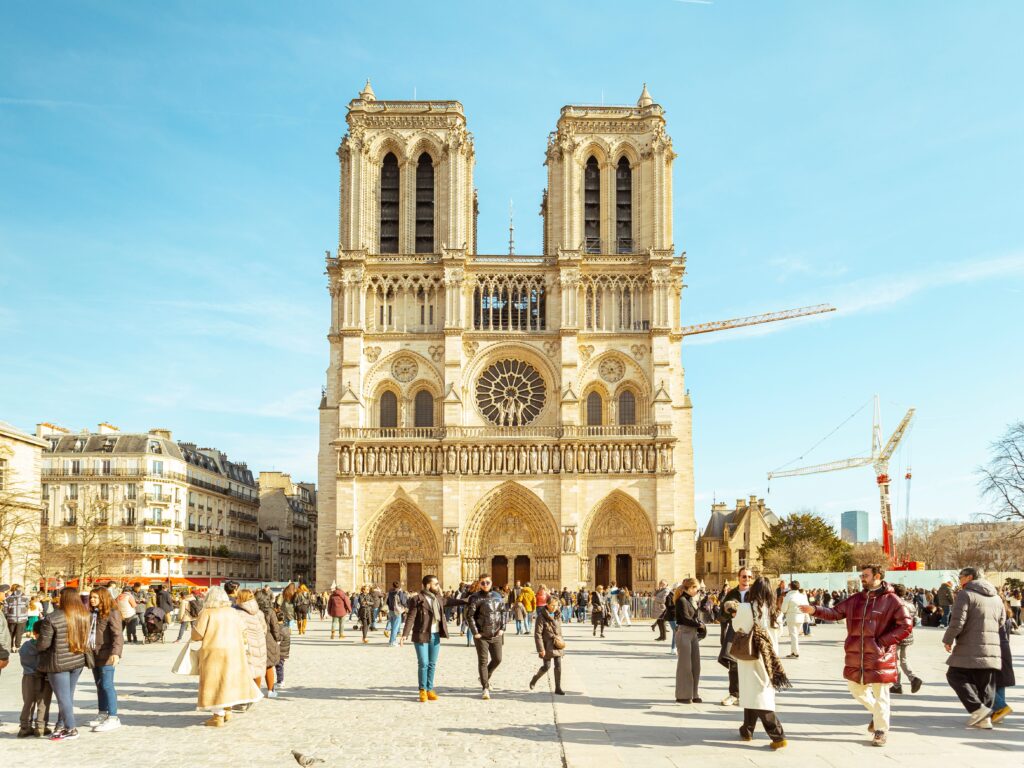
Notre-Dame Cathedral is one of the most important examples of French Gothic architecture. Construction began in the 12th century, and the cathedral has played a major role in Parisian religious and cultural history for centuries. After suffering extensive damage in the 2019 fire, Notre-Dame underwent a major restoration before reopening to visitors in December 2024.
For travelers, general interior admission is free, making this one of the most valuable major attractions for a budget-focused Paris itinerary. Following its reopening in December 2024, it once again became one of the city’s major attractions. Its historic architecture and central location make it worth including even on a low-cost Paris itinerary.
Since there is no general admission fee, the cathedral can help balance the cost of paid attractions such as the Eiffel Tower or the Louvre. During busy periods, visitors may need a free timed reservation, so checking the current entry arrangements before visiting can help you avoid delays and unnecessary changes to your itinerary.
4. Sacré-Cœur Basilica and Montmartre
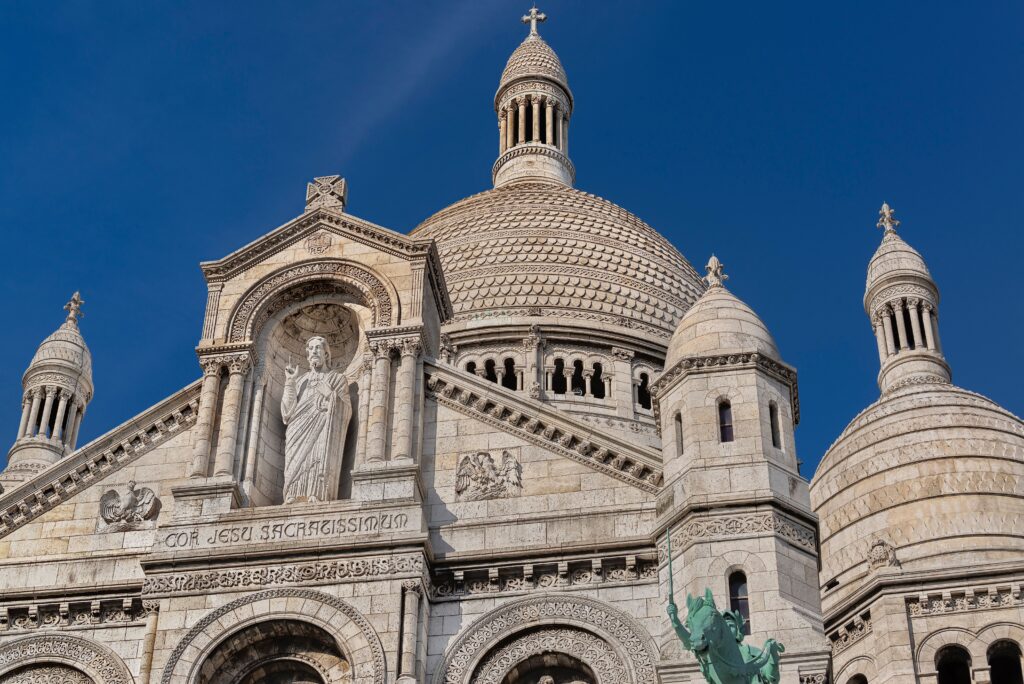
Sacré-Cœur Basilica sits on Montmartre’s highest point, overlooking much of Paris. The white-domed basilica was constructed in the late 19th and early 20th centuries and has become one of the most recognizable landmarks in the neighborhood. Montmartre itself has a long artistic history and was associated with painters, writers and performers who helped shape its distinctive character.
For visitors, entry to the basilica is free, while the optional dome climb costs around $9. The surrounding neighborhood is also known for its artistic history, charming streets and viewpoints. This combination of a major landmark, historic streets and elevated views makes the area particularly appealing to travelers who want to experience several parts of Paris without paying for multiple attractions.
You can experience much of the neighborhood without paying for additional attractions. Walk around Place du Tertre, the surrounding streets and nearby viewpoints while enjoying the atmosphere. Travelers can also save by purchasing a sandwich or pastry from a local bakery and eating it while exploring the area.
5. Arc de Triomphe
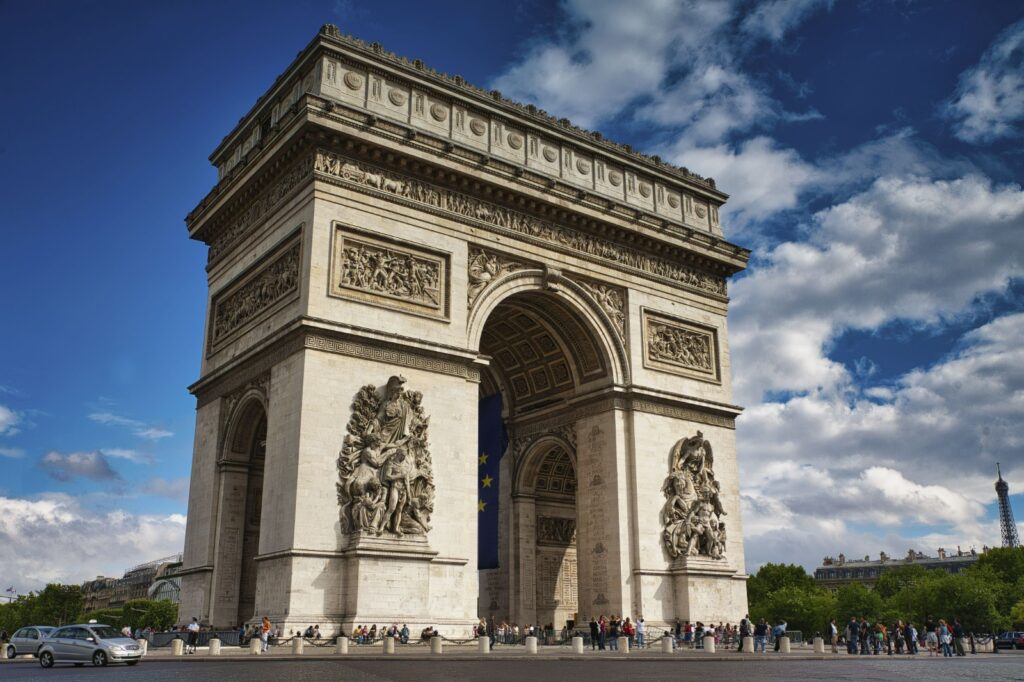
The Arc de Triomphe was commissioned by Napoleon Bonaparte after the Battle of Austerlitz and was completed in 1836. The monument honors French soldiers and carries the names of military victories and generals on its surfaces. Located at the western end of the Champs-Élysées, it also forms the center of one of Paris’s most famous traffic circles.
For visitors who want to go inside, adult admission in 2026 is approximately $19–$26, depending on the season, and eligible visitors may qualify for free entry. Its location also makes it convenient to combine with a walk along the Champs-Élysées. The monument is particularly worthwhile for travelers interested in Paris’s history and panoramic city views.
You can see and photograph the exterior for free, so paying for entry is optional. If you want panoramic views from the top, include the ticket in your sightseeing budget. Combining the visit with nearby attractions and walking instead of taking additional transportation can help keep your daily costs lower.
6. Musée d’Orsay

The Musée d’Orsay is housed inside the former Gare d’Orsay railway station, which was built for the 1900 Paris World’s Fair. The building was later transformed into a museum and opened in 1986. Today, it is particularly famous for its collection of 19th- and early 20th-century art, including major Impressionist and Post-Impressionist works.
For art lovers, admission is approximately $19, with reduced evening pricing on Thursdays after 6 p.m. The collection is particularly appealing to travelers interested in Impressionist and Post-Impressionist works. It is also a good alternative for visitors who want a more focused art experience than the much larger Louvre.
If you are trying to control museum expenses, consider choosing one major museum per day rather than buying tickets for several museums. Budget travelers should also check current free-entry opportunities and take advantage of reduced Thursday evening pricing when it fits their schedule.
7. Luxembourg Gardens

The Luxembourg Gardens were created in the early 17th century for Marie de’ Medici, the widow of King Henry IV, as part of the Luxembourg Palace complex. The gardens later became a public space and are now one of the most popular places in central Paris for walking, relaxing and enjoying outdoor scenery. Their formal landscaping, fountains and open spaces provide a quieter contrast to the city’s busy tourist areas.
For budget travelers, there is no general admission fee, making the gardens ideal for walking, relaxing, taking photos and enjoying the Parisian atmosphere. They are especially useful for travelers who want a slower activity between paid attractions. Spending an hour or two here can also give you a break from museums and crowded landmarks without adding another ticket to your itinerary.
Make the gardens part of a low-cost afternoon instead of paying for another attraction. Pick up affordable food from a nearby bakery or market and enjoy a picnic rather than paying for a restaurant meal. Combining the gardens with nearby neighborhoods can also reduce transportation costs.
8. Père Lachaise Cemetery

Père Lachaise Cemetery opened in 1804 and became one of Paris’s most important historic cemeteries. It is the final resting place of numerous well-known artists, writers, musicians and other historical figures. Its tree-lined paths, monuments and elaborate tombs make it feel more like a historic outdoor site than a conventional cemetery and give visitors another way to experience the city’s history.
For travelers looking for free activities, there is no admission fee to enter the cemetery. It provides a different experience from Paris’s major monuments and museums and can be a good option for visitors who want to explore the city’s history at a slower pace. The extensive grounds also make it possible to spend time exploring without paying for additional attractions.
Since there is no admission fee, it is an easy attraction to add when you are trying to keep daily sightseeing costs low. Plan your visit around other nearby activities and walk through the cemetery rather than paying for additional entertainment. It can also help balance a day that includes more expensive attractions.
9. Marché aux Puces de Saint-Ouen

The Marché aux Puces de Saint-Ouen traces its origins to the 1870s, when waste pickers settled outside Paris’s fortifications. The official date of birth of the flea market is generally given as 1885. Today, it is one of the world’s best-known destinations for antiques, vintage furniture, collectibles and secondhand goods.
For visitors, exploring the market area is an interesting way to experience a different side of Paris without buying a traditional attraction ticket. The market offers antiques, vintage goods and market stalls spread across one of the city’s best-known flea-market areas. It provides a different experience from the historic landmarks and formal museums found throughout central Paris.
You can browse the market without spending anything, so set a clear shopping budget if you are interested in antiques or vintage items. Combining the visit with inexpensive food nearby can make it a low-cost half-day activity. Travelers who enjoy browsing rather than shopping can experience the market atmosphere without adding an attraction ticket to their budget.
How Much Does Transportation Cost in Paris in 2026?
Getting around Paris can be affordable when you combine walking with public transportation. In 2026, a single Metro or RER ride costs about $3, while a bus or tram ride costs about $2.40. A Navigo Day Pass costs around $14, and a Navigo Weekly Pass costs about $37. Airport transportation is approximately $16 from Charles de Gaulle Airport by RER B and $16 from Orly Airport on Metro Line 14.
| Transport Option | Cost |
|---|---|
| Metro/RER single ticket | ~$3 |
| Bus/tram single ride | ~$2.40 |
| Navigo Day Pass | ~$14 |
| Navigo Weekly Pass | ~$37 |
| RER B to CDG Airport | ~$16 |
| Metro Line 14 to Orly | ~$16 |
| Vélib’ bike share | ~$6/day + usage |
Paris Food Costs: How to Eat on a Budget
Food can be a significant part of your Paris travel budget, but you do not need expensive restaurant meals every day. A budget traveler can plan for around $25–$40 per person per day by combining bakeries, markets, casual restaurants and fixed-price lunch menus, while choosing inexpensive options for breakfast, lunch and dinner.

Budget-Friendly Places to Eat in Paris
If you want to keep food costs under control, these areas and restaurants can be useful starting points:
- Marché d’Aligre
– A neighborhood food market where travelers can buy fresh produce and ingredients for an inexpensive picnic or takeaway meal. Paris currently has dozens of food markets across the city.
- Marché des Enfants Rouges
– A historic covered market in the Marais with food stalls and ready-to-eat options.
- La Cour du Faubourg
- Bistrot de Beaubourg
- Paris je t’aime
Paris Safety and Tourist Scams to Know
Paris is a popular destination for tourists, but crowded attractions and public transportation can create opportunities for pickpocketing and common tourist scams. Staying alert, securing your valuables and using official services can help you avoid unnecessary problems and expenses.
- Watch for Pickpockets: Keep your phone, wallet and passport secure in crowded areas, especially around major attractions and public transportation. Use a closed bag, avoid easily accessible pockets and keep your valuables within reach.
- Be Careful With Street Scams: Tourists may encounter fake petitions, unwanted approaches or street gambling schemes in busy areas. Do not participate in games that promise easy money or hand over money to suspicious individuals.
- Use Official Tickets: Buy attraction tickets from official websites or authorized sellers rather than accepting offers from strangers near major landmarks. This can help you avoid overpriced or fraudulent tickets.
- Check Prices Before Ordering: Check restaurant and café menus before ordering, particularly in busy tourist areas. Comparing prices beforehand can help you avoid unexpected expenses and stay within your daily food budget.
- Keep Important Documents Safe: Keep your passport, payment cards and other important documents secure. Carry digital or physical copies of essential documents, and contact your bank immediately if your cards are lost or stolen.
How Much Does a Trip to Paris Cost in 2026?
Your Paris budget mainly depends on accommodation, food, transportation, and paid attractions. A budget traveler can plan for around $100–$150 per day, including budget accommodation, inexpensive meals, public transportation, and a limited number of paid attractions. A more comfortable trip may cost around $150–$225 per day, particularly when staying in a private room, eating at restaurants more often, and visiting several paid attractions. Travelers seeking a higher level of comfort can expect to spend $225 or more per day, depending on their accommodation, dining choices, and activities.
For a 3-day Paris trip, a reasonable budget is approximately:
- Backpacker: $210-$240 best for hostels, inexpensive food, walking and mostly free attractions.
- Budget traveler: $315-$360 allows for better accommodation, public transportation, casual meals and some paid attractions.
- Moderate traveler: $420-$525 provides more flexibility for private accommodation, restaurant meals and multiple attractions.
These figures are approximate 2026 estimates, not fixed prices. Your actual spending can vary significantly depending on travel dates, accommodation availability, dining choices, transportation needs and attraction ticket prices.
10 Ways to Save Money in Paris in 2026
Paris can be expensive, but smart choices can help you enjoy the city while staying within your budget. Here are 10 practical ways to save money in Paris in 2026.
- Prioritize Free Attractions: Paris has several major attractions that you can enjoy without paying an admission fee. Notre-Dame Cathedral, Sacré-Cœur Basilica, Luxembourg Gardens and Père Lachaise Cemetery are good examples. Building your itinerary around free attractions can reduce the amount you spend on sightseeing.
- Walk Between Nearby Attractions: Walking is one of the easiest ways to cut transportation costs in Paris. Group attractions that are close to each other and explore them on foot instead of taking the metro for every short journey. Walking also gives you more opportunities to discover Parisian neighborhoods along the way.
- Choose Public Transportation Carefully: Use the Metro, RER, buses and trams for longer journeys, but compare individual ticket prices with day or weekly passes before buying. If you expect to make several trips in one day, a pass may provide better value depending on your itinerary.
- Choose Lunch Over Expensive Dinner: Restaurant prices can add up quickly in Paris. Look for fixed-price lunch menus, often called formules, which can provide better value than ordering a full dinner. Eating your main restaurant meal at lunchtime can leave more room in your daily budget.
- Buy Food From Bakeries and Markets: You do not need to eat at a restaurant for every meal. Local bakeries, markets and food shops can provide affordable options such as baguettes, sandwiches, cheese, fruit and pastries. Take your food to a park or another suitable public area for an inexpensive Paris-style picnic.
- Take Advantage of Free Museum Opportunities: Some museums offer free admission on specific days or to eligible visitors. Check the museum’s official website before your trip for current free-entry rules, reservation requirements and eligibility. Planning around these opportunities can save money if museums are a major part of your itinerary.
- Book Accommodation Early: Accommodation can become one of the largest expenses on a Paris trip, particularly during busy travel periods. Booking hostels or budget hotels early can give you more choices and potentially lower rates. Flexible cancellation options can also be useful when available.
- Stay Outside the Most Expensive Tourist Areas: You do not necessarily need to stay next to the Eiffel Tower, Louvre or Champs-Élysées. Areas a few Metro stops away can offer more affordable accommodation while still providing convenient access to central Paris. Compare the accommodation savings with the additional transportation time and cost.
- Group Attractions by Neighborhood: Plan each day around attractions that are located close together. For example, you can combine the Louvre, Tuileries Garden and Seine in one area and explore Notre-Dame and the Latin Quarter together. This reduces unnecessary transportation costs and helps you spend more time sightseeing.
- Check Official Websites Before You Visit: Prices, opening hours, reservation requirements and temporary closures can change. Before heading to an attraction, check its official website for the latest information. This can help you avoid unexpected costs, wasted trips or arriving when an attraction is closed.
Paris offers plenty of ways to enjoy its most famous attractions without overspending. By combining free attractions, walking, public transportation, affordable meals and selective paid experiences, travelers can create a memorable trip while staying within their budget.
Planning ahead, comparing attraction prices and checking official websites before visiting can also help avoid unnecessary costs and unexpected changes. Whether you are visiting the Eiffel Tower, Louvre, Notre-Dame or Montmartre, the best Paris itinerary is one that balances the attractions you want to experience with the amount you want to spend.
Frequently Asked Questions
Back to topSeveral major attractions are free, including Notre-Dame Cathedral, Sacré-Cœur Basilica, Luxembourg Gardens and Père Lachaise Cemetery.
A budget traveler can plan for around $100–$150 per day, including accommodation, food, transportation and a limited number of paid attractions. A more comfortable trip may cost around $150–$225 per day, while travelers seeking higher-end accommodation, dining and experiences may spend $225 or more per day. Your actual costs will depend on your travel dates, accommodation, food choices, transportation and paid attractions.
The Eiffel Tower requires a ticket for access to its paid levels. However, travelers can see and photograph the tower for free from locations such as Trocadéro and Champ-de-Mars.
Yes. General interior admission to Notre-Dame is free, although visitors may need to reserve a free timed entry depending on demand and current visitor arrangements.
Walking is the cheapest option for short distances. For longer journeys, compare individual Metro/RER fares with Navigo day or weekly passes based on how frequently you plan to travel.
Montmartre and Belleville are among the areas with relatively lower budget accommodation rates. The Latin Quarter and Bastille/Oberkampf can also offer a good balance between location, accommodation and access to affordable food.