At Finsery, we provide independent, research-driven financial content. To keep our articles, tools, and resources free for readers, we may receive compensation from companies featured on our site through affiliate links, referral partnerships, or paid placements. This compensation may influence how and where products appear on our site (such as the order or placement of products within categories), but it does not affect our editorial opinions, recommendations, or reviews, which remain based on objective analysis. While we strive to ensure the accuracy and timeliness of all information, Finsery makes no representations or warranties regarding the completeness, applicability, or future availability of any product, service, or offer. Product terms, conditions, and policies are provided by the respective companies and may change without notice. We do not include every company or financial product available in the marketplace. Some offers may be subject to eligibility requirements, approval processes, or geographic restrictions. Your personal circumstances may impact whether a product is right for you. Any compensation received by Finsery does not constitute an endorsement of any company or product. All content is provided for informational purposes only and should not be considered personalised financial, investment, tax, or legal advice. Please consult a certified professional for advice specific to your situation.
Does Closing a Credit Card Hurt Your Credit? What to Know Before You Cancel

Editorial Note: The information provided on Finsery is for general informational purposes only and is not intended as financial or professional advice. Our team conducts independent research to share insights we believe are accurate and helpful at the time of publication. Some of the products or services featured on this page are from our advertising partners, who may compensate us if you click through links on our site. However, affiliate relationships do not influence our editorial opinions, our reviews and recommendations remain based on our own independent research and analysis.
Editorial Note: Finsery provides general informational content only, not financial advice. We may earn a commission from our advertising partners when you click links, but our editorial opinions remain independent.
Key Takeaways
- Closing a credit card can affect your credit, but it does not always lower your score.
- Losing available credit can raise your utilization, even if you owe nothing on the closed card.
- A closed account in good standing can generally remain on your credit report for up to 10 years.
- Closing a credit card does not erase an outstanding balance. You must continue making payments, and interest may continue to accrue.
- Before canceling, compare the costs and benefits and consider a product change or other alternatives.
Closing a credit card can affect your credit score, but it does not automatically cause your score to drop. The impact often depends on how closing the account changes your overall credit utilization, along with your broader credit history and the scoring model used. If you are considering canceling an unused card, avoiding an annual fee, or reducing the temptation to overspend, review the potential credit impact before making a decision. This guide explains what happens when you close a credit card, when closing one may make sense, and how to handle the process responsibly.
Does Closing a Credit Card Hurt Your Credit Score?
Closing a credit card can lower your credit score in some situations, particularly if it reduces your total available credit and increases your overall credit utilization ratio. However, the impact varies depending on your credit profile and the scoring model used.
Before closing an account, compare your total credit limits with your outstanding balances, evaluate the card’s costs and benefits, and consider whether you plan to apply for a major loan soon. The Consumer Financial Protection Bureau recognizes that closing a credit card can be reasonable in certain circumstances, even if it affects your credit score.
How Closing a Credit Card Can Affect Your Credit Score
Credit scoring models evaluate several aspects of your credit history. According to myFICO , FICO® Scores consider five major categories: payment history, amounts owed, length of credit history, new credit, and credit mix. Closing a credit card can affect your credit profile in different ways:
- Credit utilization: Closing a card reduces your available credit limit. If your balances on other cards stay the same, your overall utilization may increase.
- Length of credit history: A closed account in good standing can remain on your credit report for years. Closing the account does not necessarily reduce your average account age immediately.
- Credit mix: Closing a card may affect the range of credit accounts you have, particularly if it is your only revolving account. However, the effect depends on your overall credit profile and the scoring model.
The impact of closing a card therefore depends on the details of your credit history, not simply on the number of cards you have.
How Closing Different Credit Cards Affects Credit Utilization
Your overall credit utilization ratio compares your total revolving credit card balances with your total available credit limits. Closing a card can reduce the available credit used in that calculation, even when your outstanding balances do not change.
Understanding how credit utilization affects your credit score 
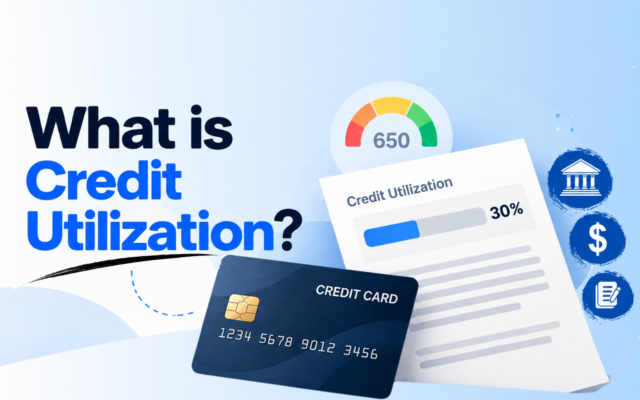 What is Credit Utilization? How it Affects Your Credit Score can help you evaluate the potential impact before closing an account. Consider the following example: You have three credit cards with limits of $5,000, $3,000, and $2,000, and a combined balance of $2,000.
| Scenario | Total available credit | Utilization |
|---|---|---|
| Keep all three cards | $10,000 | 20% |
| Close the $2,000-limit card | $8,000 | 25% |
| Close the $3,000-limit card | $7,000 | About 29% |
| Close the $5,000-limit card | $5,000 | 40% |
As the examples above show, your outstanding balances remain the same, but your total available credit decreases when you close an account. For instance, closing the card with the highest credit limit in this example increases your credit utilization from 20% to 40%.
Lower credit utilization is generally preferable for credit scoring, but 30% is not a universal threshold that determines whether every person’s score will rise or fall. The effect depends on your credit profile and scoring model. To estimate how changes in balances and limits affect your overall utilization, use Finsery’s credit utilization calculator Credit Utilization Calculator.
What Happens to Your Credit Score After You Close a Card?
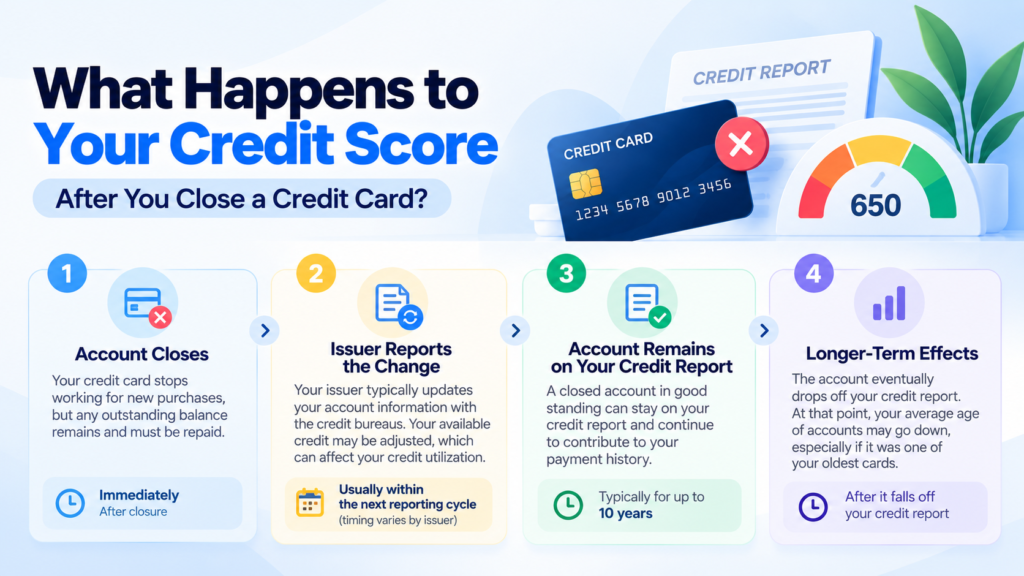
The effect of closing a credit card does not necessarily appear all at once. The timing depends on when the issuer reports the account’s updated status and balances, as well as how your overall credit profile changes.
When your credit card issuer completes processing the account closure, you will no longer be able to use the card for further transactions. But closing your account does not mean deleting all payment records associated with it or clearing any balance on the account. If there is an outstanding amount due, you still have to pay it.
There might not be any immediate effect on your credit score either. It depends on how much total credit limit you have, among other variables.
Credit card issuers will usually update your information at regular intervals to the credit reporting agencies. After your account is closed and the new credit limit reported, your total revolving credit could drop. As a result, you might see your utilization ratio rise, which can be problematic for your credit score depending on how it’s calculated by each agency.
Consider this example: Your total credit limit across all accounts is $10,000, with outstanding balances totaling $2,000. That results in an overall utilization ratio of 20%. Now, if you close one of those accounts, reducing the total credit available to $5,000 while keeping the balance constant at $2,000, then the ratio will double to 40%.
Keep in mind that there are many variables involved in determining how much this impacts your score.
Once you close your credit card account, it won’t disappear from your credit report instantly. A positively reported closed credit card could be kept by credit bureaus on file for about ten years. For those ten years, it will keep being a part of your overall credit report and potentially contribute to your credit scores.
Once this card expires, you might see your average account age recalculated based on whatever scoring system the bureaus use. If there was any negative information on it, such as missed payments, it would follow another set of guidelines, lasting no longer than seven years.
Having your accounts reported for some predetermined amount of time doesn’t automatically result in a decline in your credit score. It all depends on how you handle your credit in general.
Can You Close a Credit Card That Still Has a Balance?
Yes. You can generally request to close a credit card account even if you still owe a balance, subject to the issuer’s account terms and procedures. Closing the account does not eliminate the debt. You must continue making at least the required payments until the balance is paid off.
Interest may continue to accrue on an unpaid balance under the applicable card agreement. You should also confirm how the issuer will provide statements and accept payments after closure. The CFPB’s guidance on interest after account closure confirms that closing an account does not eliminate your outstanding balance or stop interest charges.
- Outstanding Balance and Payments: You must continue making required payments after closing the card, as the outstanding debt remains and missed payments can negatively affect your credit report.
- Interest After Closure: Interest
 What is a Credit Card Interest and How Does It Work? A Simple Guide may continue to accrue on unpaid balances, depending on your cardholder agreement.
 - Credit Reporting and Utilization: The closed account may remain on your credit report, while losing its credit limit may increase your overall utilization. Once repaid, it may show a zero balance.
For example, if you close a card with a $1,500 balance, you must continue making payments and may incur interest. After repayment, the account may show a zero balance and remain on your credit report for up to 10 years if it was in good standing.
How Long Does Closing a Credit Card Affect Your Credit Score?
There is no single timeline for how long closing a credit card may affect your credit score. The effect on utilization can occur when the account’s updated information is reflected in your credit profile. The account’s payment history may remain on your credit report after closure, so closing a card does not automatically erase its history.
Consider these four points:
- Utilization changes: Your utilization may change when the credit limit and account status are updated in your credit profile.
- Closed-account reporting: An account in good standing can generally remain on your credit report for up to 10 years.
- Account age: If a closed account eventually disappears from your credit report, it may affect account-history calculations depending on the scoring model.
- Negative information: Certain negative information can remain on a credit report for up to seven years, subject to the applicable reporting rules.
These periods describe credit reporting, not a guaranteed period during which your credit score will be affected. The impact can vary as your balances, payment history, and other credit information change. The CFPB’s explanation of credit-reporting periods outlines how long different types of information can remain on your credit report.
Should You Close a Credit Card or Keep It Open?
Whether a person closes the credit card account or not depends on many factors such as cost, benefit, credit limit, and usage of the credit card. Retaining the credit card account will help maintain credit availability, especially in case when the credit limit is high and there are no annual fees for using the card. It would be reasonable to close the credit card if its cost is higher than the benefits it brings or if the credit availability makes it difficult to handle the debt.
When Keeping a Card Open May Be Better
Keeping a card open may help preserve your available credit, particularly if it has a high limit and no annual fee. An older account in good standing can remain on your credit report for up to 10 years after closure, so closing it does not immediately erase its history. If the card offers valuable rewards or benefits, keeping it may also be worthwhile. However, monitor inactive accounts because the issuer may close them under its policies.
When Closing a Card May Make Sense
Closing a credit card may make sense if its annual fee outweighs the benefits, it encourages overspending, or its terms no longer suit your needs. Before canceling, ask the issuer about a no-annual-fee alternative. If you suspect fraud, contact the issuer to determine whether replacing or locking the card is more appropriate. Your financial well-being should take priority over preserving a particular credit score.
Which Credit Card Should You Close First?
If you have several credit cards and want to close one, compare the financial costs with the possible effects on your credit profile. The card with the highest annual fee is not necessarily the worst one to keep, and the oldest card does not automatically have to remain open.
| Factor | Better candidate to close | Better candidate to keep |
|---|---|---|
| Annual fee | Has a fee you cannot justify | No annual fee |
| Credit limit | Low limit | High limit |
| Account age | Newer account | Older account |
| Rewards | Perks you do not use | Rewards you actively earn |
| Interest rate | Higher APR | Lower APR |
| Spending risk | Tempts you to overspend | Easy to manage responsibly |
There is no single rule for which card you should close first. Compare the annual fee with the benefits you actually use, consider how much available credit you would lose, and review whether the card encourages spending you cannot comfortably repay. If you are preparing to apply for a mortgage or auto loan, consider discussing the potential impact with your lender before making a change.
What Are the Alternatives to Closing a Credit Card?
Closing out your credit card is just one way of reducing the cost of your card or restricting your spending through that credit card. There are other options depending upon your credit card company and circumstances.
- Downgrade Your Card: Request that your issuer move you to a card with no annual fee to save money while keeping your account history and credit limit intact.
- Raise Another Card’s Limit: Request that another card’s limit be raised to make up for the loss of credit from the closure of your account.
- Lock Your Card: Use your issuer’s card lock function to prevent further purchases without closing the account.
- Leave it Inactive: Do nothing if the card has no annual fee, though check in on it because the issuer might close it due to inactivity.
- Pay Recurring Bills: Charge a small bill to your card monthly and pay off your statement balance on time to keep your account active.
Before closing a card to avoid an annual fee, ask the issuer whether a no-annual-fee product change is available. If your main concern is overspending, these steps to use credit cards without going into debt  How to Use Credit Cards Without Going Into Debt: A Step-by-Step Guide may help you manage your cards without necessarily closing an account. Consider whether locking the card or removing it from digital wallets would help. Choose the option that best addresses your financial situation rather than focusing on your credit score alone.
How to Close a Credit Card Without Missing Important Steps
A step-by-step approach to closing your credit card can help you avoid missed payments, lost rewards, and unexpected charges. Before requesting closure, review your outstanding balance and pending transactions, redeem any eligible rewards, and move recurring payments to another payment method. The Consumer Financial Protection Bureau (CFPB) also provides guidance on closing a credit card to help you understand the process and manage any remaining balance.
- Review the account balance: See your outstanding balance, pending charges, and upcoming payments. Figure out how to settle the rest of your debts and see if there is any additional interest charged.
- Rewards redemption: Look at your existing rewards, such as cash back, points, miles, and others. Try to redeem or transfer them as some companies can refuse to reward you after you close the account.
- Transferring subscriptions and automatic payments: See what recurring charges you have connected with the card. Update all the information to avoid interruptions of services and fees.
- Pending transactions and refunds: Check all your recent charges, pending transactions, and refunds before closing the account. If you are not sure how it will be done, contact the issuer.
- Contact the issuer and close the account: Use the official way of closing the account from the issuer. Ask the issuer about your remaining balance, payment, and other requirements to close the account.
- Written confirmation of the account closure: Ask for the official confirmation in writing that the account is closed to use it in case of problems in the future.
- Monitor statements until all amounts are settled: Continue checking statements for outstanding balances, interest charges, refunds, and other transactions. Make all required payments on time, even after the account has been closed.
What Should You Do After Closing a Credit Card?
Closing a credit card is only the first step. After the account is closed, confirm that the issuer has processed your request and check that any remaining balance, interest charges, and pending transactions are handled correctly.
Confirm the Account Closure: Contact your card issuer or check your account records to verify that the account is closed. Keep written confirmation for your records, and make sure you know how to access statements if you still owe a balance.
Review Your Credit Reports: After the issuer has had time to report the change, review your credit reports to confirm that the account status and balance are accurate. If you find incorrect information, contact the issuer and dispute the error with the relevant credit reporting agency.
Continue Paying Any Remaining Balance: Closing your card does not eliminate outstanding debt. Continue making the required payments until the balance is paid in full, and review your statements for interest charges, refunds, and other adjustments. Because missed payments can harm your credit history, review what happens when you miss a credit card payment 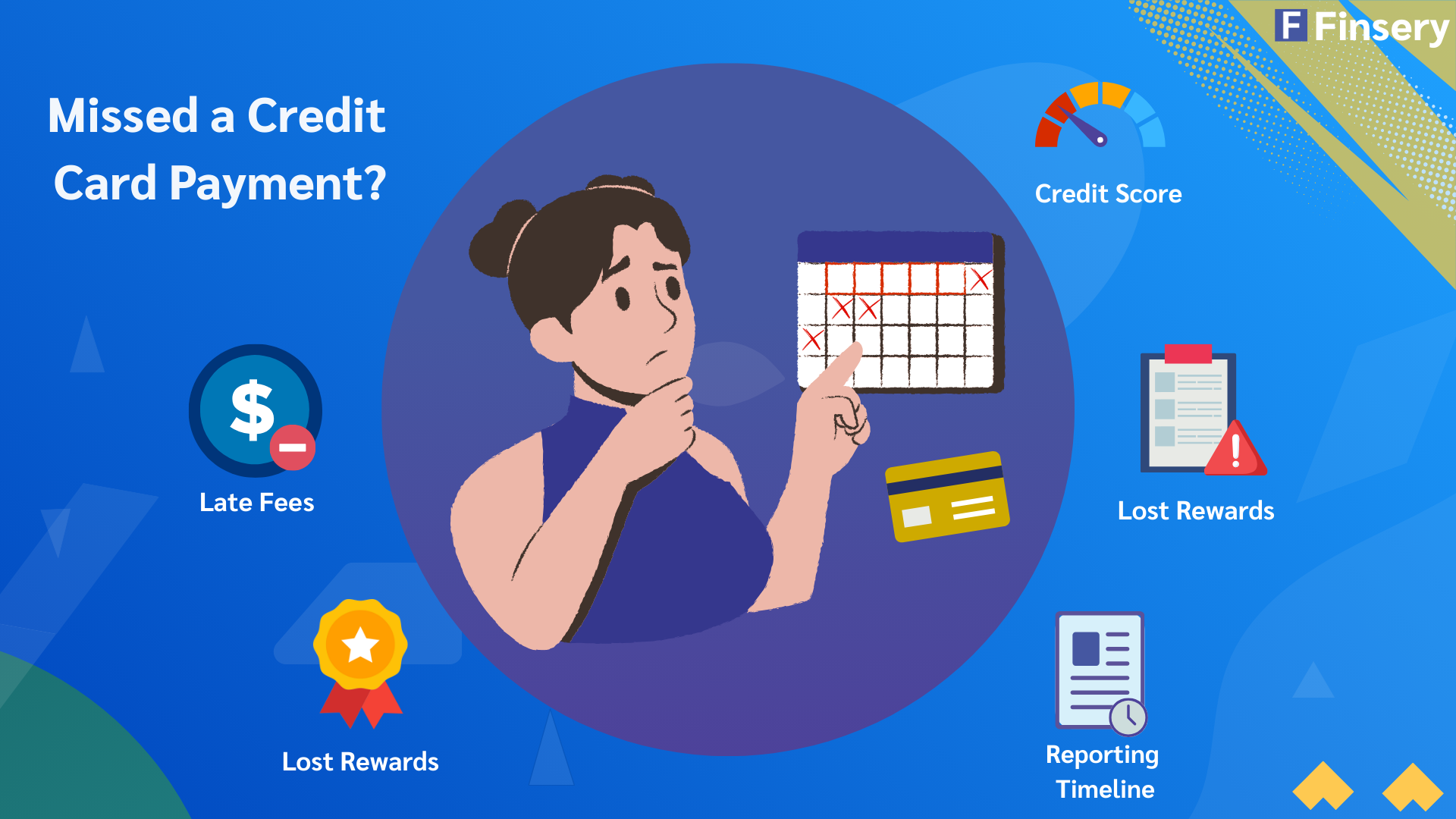 What Happens if I Miss a Credit Card Payment? How to Avoid Long-Term Damage and how to avoid further damage.
Check Your Credit Reports for Free: You can obtain free credit reports from the major US credit reporting agencies through AnnualCreditReport.com . Remember that a credit report contains information about your credit history, while a credit score is a numerical assessment based on information in your credit profile.
Frequently Asked Questions
Back to topIt can, mainly through utilization. Once the issuer reports the closure, your available credit drops and your utilization may rise. The timing depends on when your issuer reports to the bureaus, so the change does not always appear the same day.
Usually think twice. An older account contributes to your credit history, and it may also have a larger limit. Weigh that against any annual fee and the benefits you get. If the fee is the problem, ask about a no-fee version first.
It can. You owe nothing on that card, but you lose its credit limit. That reduces your total available credit, which can raise your utilization on your remaining cards even though your debt has not changed.
Does closing a credit card hurt your credit score? Closing a credit card can lower your credit score, especially if it reduces your total available credit and increases your credit utilization. However, the impact is not the same for everyone. Whether you want to cancel an unused credit card, avoid annual fees, control overspending, or simplify your finances, understanding how closing a credit card affects your credit score can help you make the right decision. Before you cancel, learn how credit utilization, account history, and your remaining credit limits may affect your score, when keeping an old credit card makes sense, and how to close an account responsibly.
Yes. Issuers can close accounts, and their terms and policies vary. Inactivity is one common reason. Check your cardholder agreement and any notice you receive.
In most cases, it is prudent to avoid unnecessary account changes before a major credit application. Reviewing your utilization first and talking with your lender can help you decide.
Be careful. Closing it means losing all your available revolving credit. Your history does not vanish overnight, since a closed account in good standing can stay on your report, but you will have no open card to keep building on.
The content on Finsery is created for informational and educational purposes only and should not be taken as financial advice. While we do our best to ensure accuracy and relevance at the time of publication, details may change over time or vary by individual circumstance. Finsery may earn a small commission when you click on certain links, but our editorial opinions remain independent. See our full disclaimer.
Editorial Note: Finsery content is informational only, not financial advice. We may earn from links; our opinions stay independent. See our full disclaimer.


